flowgent
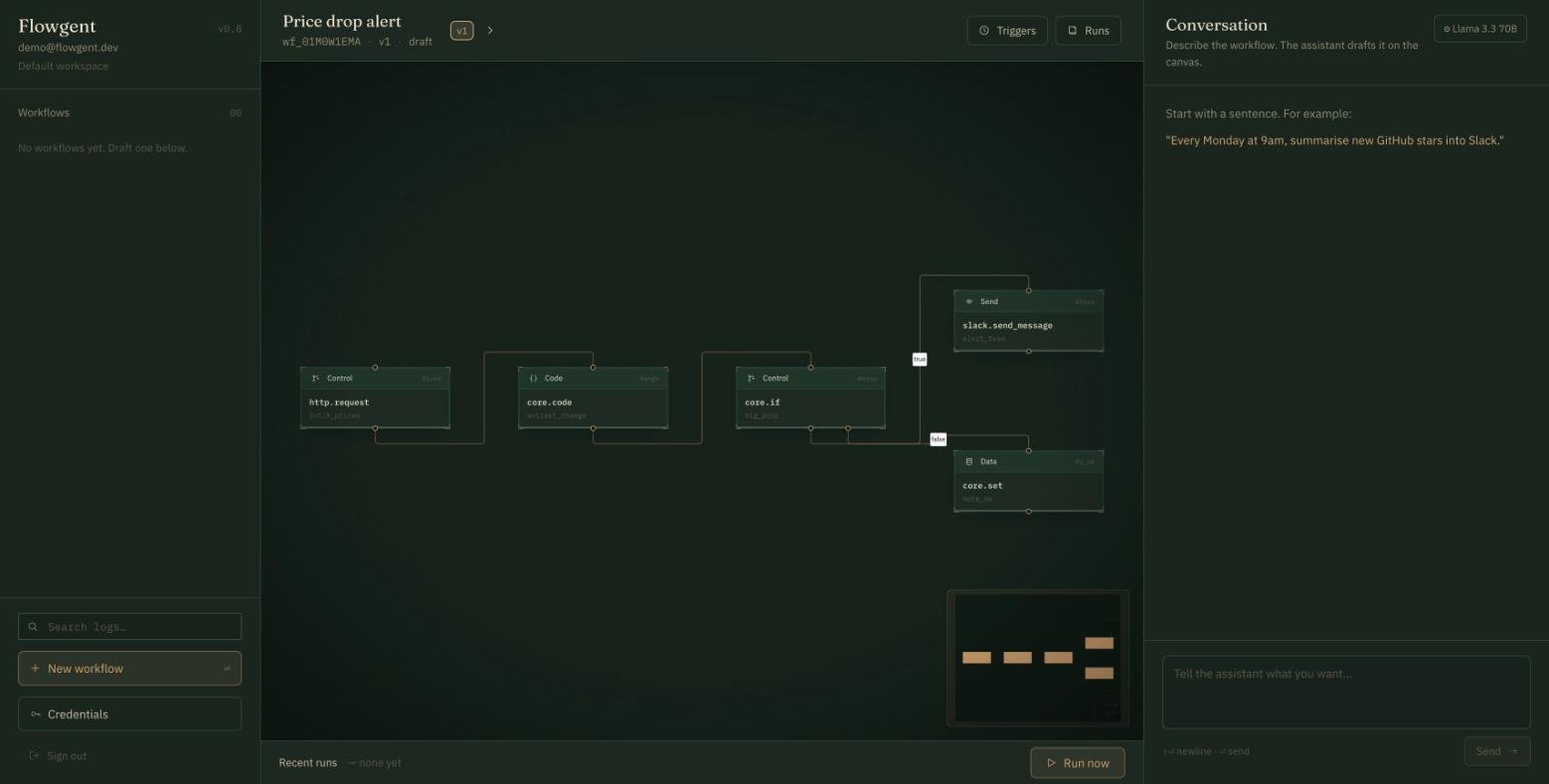
Zapier is great until you outgrow it; n8n is great until you have to draw every node by hand. Flowgent sits in the middle: a self-hostable automation engine where the interface is your sentence. You describe what you want, the agent proposes a workflow graph, you edit it on the canvas and ship it.
What’s inside
An AI agent (OpenAI + Anthropic) that generates the graph and validates its own proposal — known tool slugs, valid edges, no cycles — self-correcting up to three times. A Go executor with parallel branches, loops, classified retries and a CPU-limited JS sandbox. Cron, webhook (HMAC-verified) and manual triggers; a run viewer with live SSE log streaming, per-node IO inspection and one-click replay; Postgres full-text search over logs; credentials encrypted with AES-256-GCM. The ReactFlow editor deliberately looks like an engineering drafting table, not another SaaS dashboard.
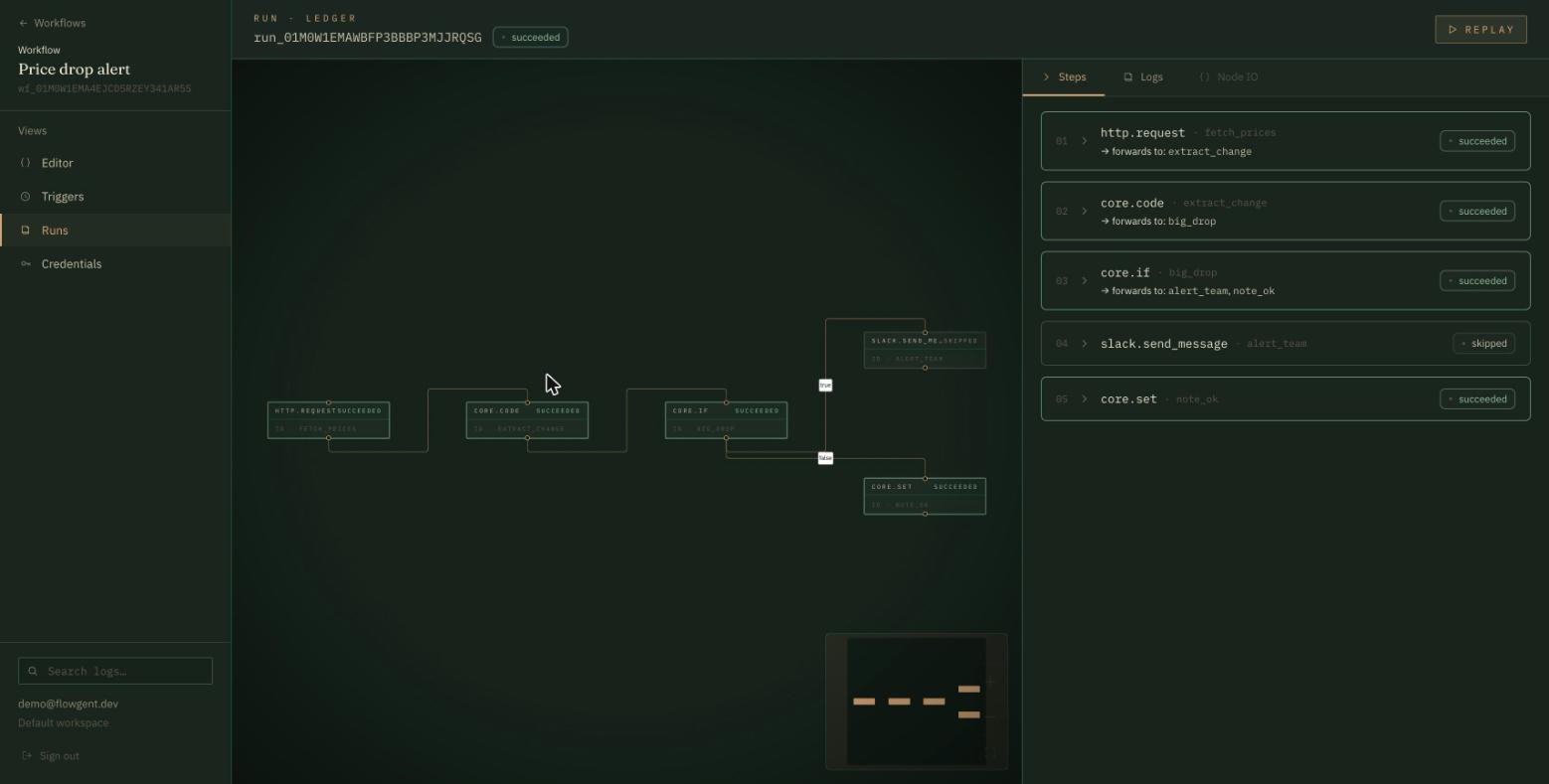
A finished run in the viewer: succeeded nodes, the skipped Slack branch, and the step ledger on the right.
How it was built
Ten planned milestones from auth foundation to self-host launch, all landed —
including a workspace-isolation IDOR sweep before opening the code. make demo
boots the whole stack in Docker; tests run with go test -race plus dockertest
integration suites. Pre-alpha and open while it bakes.